Battery Jump-Start
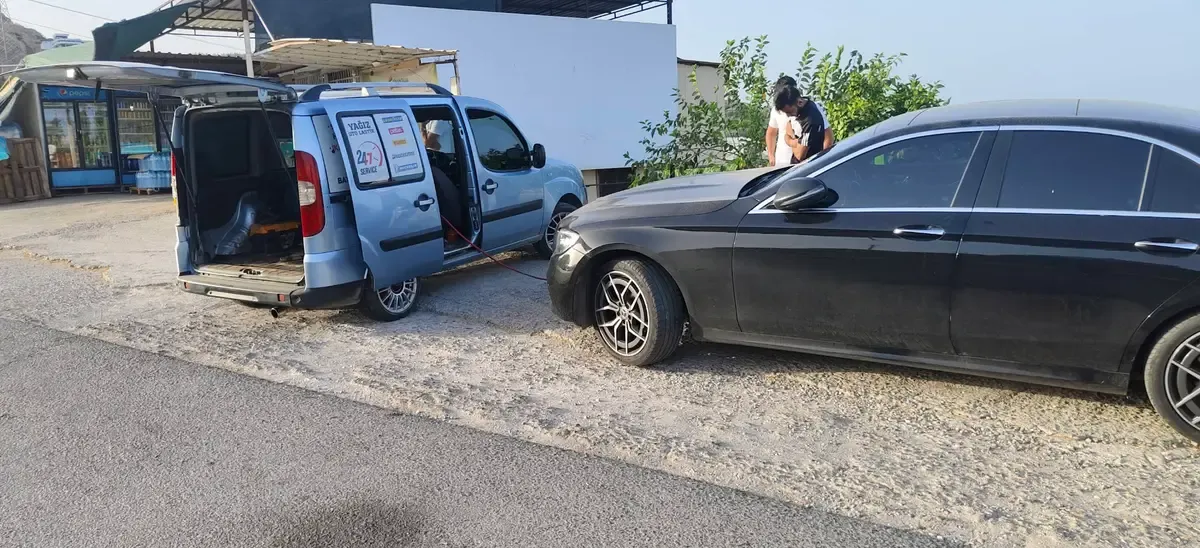
Turning the key in the morning to total silence — or finding the battery flat after leaving the lights on overnight — is one of the most common reasons drivers get stranded. Alanya Yol Yardım's jump-start team is ready across Alanya 24/7 for exactly these moments. We reach your car with the dead battery within an average of 20-40 minutes and bring it back to life with professional boost equipment. If the battery has reached the end of its life or a boost isn't enough, we replace it on-site ourselves and offer the best solution.
Why Do Batteries Die?
Batteries die because lights or interior lamps were left on, the car sat unused for a long time, cold weather, an ageing battery, or a faulty charging system (alternator). In most cases the battery isn't completely dead — the right boost gets the car running again. After the jump-start our team checks the battery and charging system, and if the problem is likely to recur we tell you clearly. That way you won't be stranded by the same fault again a few days later.
On-Site Boost, Replacement If Needed
When you call, our team comes to your location and safely starts your car with a professional booster — we never risk damage from reversed polarity or incorrect cable connections. If the battery has fully reached the end of its life, we replace it on-site ourselves with a battery suited to your make and model. Our aim is to get you back on the road quickly and safely.
24/7 Service for Every Make and Model
We jump-start every make and model, whether a passenger car, commercial vehicle, SUV or a modern car with a start-stop system. Night, weekend or holiday — whatever the hour, call us on 0555 048 07 07. We provide fast, safe battery support to every corner of Alanya with a single call.
Frequently Asked Questions
Can a jump-start damage my car?+
No. We use professional boosters and correct connection technique, jump-starting safely without harming modern electronics.
Will the battery die again after a boost?+
It can if the battery is very old or the charging system is faulty. That's why we check after the boost and recommend a replacement if needed.
Do you replace batteries on-site?+
Yes, when necessary we replace the battery on-site ourselves and provide the right solution.
How quickly do you arrive?+
We reach central Alanya and surroundings within an average of 20-40 minutes, depending on location and traffic.
Alanya Battery Jump-Start, On the Spot in Minutes
You turn the key and the car answers with a single tired click, then silence, or maybe a slow, hopeless whirr. Nine times out of ten in Alanya, that sound is a flat battery rather than anything serious, and a jump-start has you moving again faster than you would believe. From the hotel forecourts of Oba to a long-stay apartment car park in Mahmutlar, a dead battery is one of the most common reasons drivers reach for the phone. One call to 0555 048 07 07 brings a crew with the gear to boost, test and, if the battery is truly finished, replace it there and then.
Few faults are as frustrating, because a car with a flat battery looks perfectly healthy and simply will not wake up. Few are as quick to cure, either, when the right equipment turns up. The trick is telling the difference between a battery that only needs a nudge and one that has genuinely reached the end, and that judgement is what separates a lasting fix from a repeat call the next morning.
Why Batteries Die Here in Particular
The coast is hard on batteries in ways drivers do not expect. Heat, not cold, is the quiet killer; a Mediterranean summer bakes the cells and shortens their life long before winter ever tests them. Then there is the usage pattern. A holiday car that sits for days at the airport, or a second vehicle used only for weekend trips to the Dim river, never gets a proper charge, and short hops around town top it up less than people assume.
Add the classic human errors, interior lights left on overnight, a boot lid ajar keeping a lamp lit, a phone charger draining a tired battery in a parked car, and the result is predictable. A prompt jump-start solves the immediate problem, but understanding the cause is what stops it happening again next week. When a battery has simply given up after three or four summers, no amount of boosting will save it, and honest advice at that point is worth more than another temporary jump start that strands you a day later.
How the Boost Is Actually Done
Modern practice looks nothing like the old picture of two cars nose to nose and a tangle of crocodile clips. We arrive with a portable lithium booster pack, compact but powerful enough to turn over a big diesel engine, and it connects without needing a second vehicle or blocking traffic. Before anything is connected, the crew checks the terminals for corrosion and confirms the fault really is the battery and not a deeper electrical problem.
A tester tells the rest of the story. It reads the battery's state of health and the charging system, so we can say whether a boost will last or whether the alternator is failing to top it up. That diagnosis is the difference between a real fix and a false one; a careless jump-start that ignores a dying alternator just delays a second breakdown. Where the reading shows a battery past saving, an on-the-spot replacement avoids a needless towing job, and you leave with a healthy cell rather than a countdown.
Boost, Recharge or Replace: Reading the Battery
Three outcomes follow a flat battery, and choosing the right one is the whole skill. The happiest is a simple boost: the battery was merely drained by lights left on or a short series of cold starts, it takes the charge, and a decent drive afterwards tops it back up. In that case a jump-start is genuinely all you need, and the cause was circumstance rather than a worn-out cell.
The second outcome is a battery that boosts but should not be trusted, because the tester shows it is weak and living on borrowed time. The third is a battery that is simply finished, holding nothing, where boosting is only a lift home. Being straight about which of the three you are facing is what separates a real service from a quick trick; a false jump start on a dead cell just moves the breakdown a few hours down the road. When replacement is the honest answer, doing it on the spot spares you a vehicle recovery you did not need.
Mistakes That Turn a Boost Into a Bigger Bill
Well-meaning drivers do real damage. Cranking the starter over and over, hoping it will catch, only drains what little charge remains and can overheat the starter motor. Reversing the clips, red to negative in a panic, throws sparks and can harm sensitive electronics on a modern car. Push-starting an automatic simply does not work and risks the transmission.
Another trap is treating every no-start as a battery. Sometimes the culprit is an immobiliser, a blown fuse or an empty tank wearing a battery's disguise, which is why a proper jump-start begins with a check rather than a guess. If the boost brings the car to life but the warning lights stay lit, that is information, not a nuisance, and it should not be ignored on the drive home. The safest move when the dashboard goes dark is to stop, resist the urge to keep cranking, and let a crew that carries a tester diagnose it. Dependable alanya roadside assistance would rather test first than boost blind.
Season, Timing and the Sitting Car
Timing explains a lot of our battery calls. The first cool mornings of late autumn are notorious, because a battery already weakened by summer heat finally fails to find the extra current a cold start demands. The start of the season is another spike, when cars that slept through the quiet months refuse to wake. And the airport run generates its own pattern, a vehicle left for a fortnight returning to a driver in a hurry who has a flight to forget and a car that will not start.
A little foresight helps. A battery over four years old that is already cranking slowly is on borrowed time, and a hot Alanya summer will not be kind to it. If your car sits for long spells, an occasional proper drive does more good than a string of two-minute trips. When prevention runs out, though, a fast jump-start is never far away, and 24/7 roadside assistance means the hour of your dead battery, dawn or midnight, changes nothing about how quickly a crew reaches you. There is no closing time on a flat battery.
The Warning Signs Before a Battery Quits
Batteries rarely die without dropping hints, and learning to read them saves a lot of stranded mornings. The clearest sign is a starter that sounds slower than it used to, a lazy churn where there was once a crisp spin. Dashboard lights that dim noticeably at idle, headlights that brighten as you rev, and electric windows that crawl rather than snap all point at a charging system under strain. A battery that needs a boost after only a night or two of standing is telling you plainly that its days are numbered.
Age is the other clue. Once a battery is past three or four Alanya summers, treat every one of those symptoms seriously rather than hoping for one more season. Catching it early turns a planned replacement into a calm errand instead of a roadside emergency. If you have already had one jump-start this month, that is not bad luck; it is a warning, and acting on it beats waiting for the morning the car refuses entirely and you are calling for 24/7 roadside assistance with a meeting to reach.
What a Battery Callout Involves
The visit itself is refreshingly quick. You call, describe the symptoms, silent click, slow crank, dead dashboard, and we arrive with the booster and tester. The terminals are checked and cleaned if needed, the pack is connected correctly, and the engine is brought back to life, usually within a couple of minutes of the crew reaching the car. Then comes the important part: the test that tells you whether you can trust the battery or should replace it now.
If replacement is the sensible call, it can often be done there and then, so you are not left nursing a doomed cell. If the reading points instead at the alternator or a parasitic drain, you are told clearly so a garage can look properly. A good jump-start callout leaves you not just started but informed, and if the car turns out to need more than a battery, the same crew can arrange the vehicle recovery without a second phone call.
Keeping a Healthy Battery on This Coast
A few habits stretch a battery's life in the Alanya climate. Driving the car properly now and then, rather than only for short errands, lets the alternator do its job and keeps the charge up. Making sure lights and accessories are off when you leave avoids the overnight drains that catch so many people. If the car must sit for a long holiday, disconnecting or maintaining the battery prevents the flat-on-return surprise at the airport car park.
Parking in shade where you can, and replacing a battery on your own terms once it is clearly ageing rather than waiting for it to fail, both spare you the roadside version of the problem. None of this makes help unnecessary, of course; batteries still die unexpectedly, and a quick jump start is always a call away. But the driver who reads the warning signs and looks after the cell simply meets fewer dead mornings, and reliable alanya roadside assistance is happy to be the backstop rather than the monthly routine.
What Quietly Drains a Battery Overnight
Some flat batteries are not worn out at all; they have simply been drained by something left drawing power while the car slept. The obvious culprits are lights, an interior lamp glowing under a boot lid that never quite latched, or headlights left on after a dim dawn drive. The less obvious ones hide in the electrics: a dashcam wired to stay awake, a faulty relay that never lets a circuit sleep, or an aftermarket alarm that sips current all night.
Heat makes a marginal battery less able to absorb these small insults, so a drain that a fresh cell would shrug off finishes a tired one. The tell-tale sign is a car that starts fine all day, then refuses after a long stand, which points at a parasitic draw rather than the battery itself. A boost gets you going, but a battery that keeps going flat overnight has an underlying cause worth chasing before it strands you somewhere that needs a towing job instead of a two-minute fix.
Part of a good callout is spotting the pattern from your description. If the story is "it was fine yesterday and dead this morning", the crew looks beyond the cell to what might have been awake all night, and tells you plainly whether the fix is a charge, a replacement, or a trip to an auto-electrician.
The Booster Pack, and How It Changed Roadside Help
There was a time when a flat battery meant finding a good Samaritan, parking two cars nose to nose, and untangling a set of jumper cables in the hope that both drivers knew which clamp went where. It worked, but it was slow, dependent on a second vehicle, and easy to get dangerously wrong. The portable lithium booster pack changed all that. Compact enough to ride in the cab, it carries enough punch to spin a large diesel without any donor car at all.
That shift matters for roadside work because it removes the two worst variables: waiting for another vehicle and relying on a stranger's cables and knowledge. A crew arrives self-contained, connects the pack with the correct polarity, and has the engine turning in moments. It is safer for the car's electronics too, since a proper pack delivers a controlled boost rather than the crude surge of an ageing donor battery. When the boost reveals a deeper fault and the car still cannot be trusted to move, the same visit can pivot straight to a vehicle recovery without leaving you waiting for a second team.
When a Battery Is Not the Whole Story
A silent car is not always a flat battery, and assuming so wastes time. A failed starter motor clicks or does nothing even with a healthy battery. An immobiliser fault can refuse to let a perfectly charged car fire. A completely empty tank produces its own kind of no-start, and heavy corrosion on the terminals can mimic a dead cell until the connections are cleaned. This is exactly why a proper visit begins with a test rather than an assumption.
If the tester shows a strong battery, the crew looks elsewhere rather than boosting a car that was never going to start for a different reason. Some of those faults are roadside-fixable; others need a workshop, and in that case honest advice plus a careful towing job to a garage beats leaving you cranking a car that will not go. The goal is never just to make the engine turn once, but to work out why it stopped, and if that answer points beyond the battery, arranging a vehicle recovery is simply the next honest step.
A Word on Battery Types and Modern Cars
Not all batteries are the same, and modern cars have quietly raised the stakes. Vehicles with stop-start systems, which switch the engine off at every set of lights, use tougher batteries such as AGM or EFB types designed for constant cycling. Fitting an ordinary battery in place of one of these, or ignoring the way the car expects a new battery to be registered to its electronics, can leave the system unhappy even after a fresh cell goes in.
This is why a replacement is not always the two-minute swap it once was, and why honest advice matters. A crew that knows the difference can tell you whether your car needs a specific type and what a proper fix involves, rather than fitting the cheapest thing to hand and leaving you with warning lights. The immediate jump-start still gets you moving in minutes, but the follow-up advice about the right battery for a stop-start car is what saves you a repeat visit and a wasted purchase.
Battery Questions Drivers Ask
Will a boost damage my car's electronics?
Not when it is done correctly, with the right pack and correct polarity. That care is exactly why professional jump-start work beats a hurried attempt with borrowed cables.
If you boost it, do I still need a new battery?
Sometimes yes. If the tester shows the cell is worn out, a boost is only a lift home; we can replace it on the spot so you are not stranded again by tomorrow.
Can you jump-start a diesel or a big SUV?
Yes. The booster packs are rated for large diesel engines, so a heavy vehicle is no obstacle to a roadside jump-start.
My car starts but the battery light stays on. Is that a problem?
It can be a failing alternator, which needs looking at rather than ignoring. Reliable alanya roadside assistance will tell you whether it is safe to drive on.
How long does a battery last in this heat?
Often less than in cooler climates; three or four summers is common. A slow crank after that age is your cue to plan a replacement before it strands you.
Do you come out for a flat battery at night?
Any hour of the night. A dead battery at 4 a.m. gets the same 24/7 roadside assistance as one at midday, and if a tow is ever needed we handle the towing too.
Can a cold morning really kill a battery overnight?
It can finish one that was already weak. A battery worn by summer heat may cope all through warm weather, then fail to find the extra current a cooler morning demands, which is why late-autumn no-starts are so common on the coast.